
Remember when homemade jelly filled the kitchen with the sweetest smell? This old-fashioned Homemade Golden Apple Peel Jelly turns simple leftover apple peels into a beautiful golden spread that’s lovely on warm toast, biscuits or homemade bread!
It uses only the peels and cores you would normally throw away, plus sugar and lemon. If you love homemade jelly, you will also enjoy our Pineapple Jalapeño Pepper Jelly.
Why You’ll Make This Again
- Zero waste: turns apple peels and cores into something delicious.
- Beautiful golden color: clear, glossy and lightly fragrant.
- Simple ingredients: apple scraps, water, sugar and lemon juice.
- No canning needed: it is a simple refrigerator jelly.
- Makes about 24 tablespoons: perfect for sharing or gifting.
How This Comes Together
Simmer the apple peels and cores in water until fragrant, then strain the liquid through cheesecloth without squeezing. Measure the juice, add sugar and lemon juice, and boil until it reaches about 220°F and wrinkles on a chilled plate. Pour into jars, cool and chill until set.
What You’ll Need
For the Apple Infusion
- Peels and clean, seed-free cores from 8–12 medium apples
- 4–5 cups water, or enough to barely cover the apple scraps
For the Jelly (per 2 cups strained apple juice)
- 1½ cups granulated sugar
- 1 tablespoon freshly squeezed lemon juice
Optional
- 1 small cinnamon stick
- A little lemon zest
Prep Time: 15 minutes | Cook Time: 60 minutes | Total Time: 1 hour 15 minutes, plus chilling until set | Makes: about 24 tablespoons
Estimated Nutrition: about 75 calories and 0 g protein per tablespoon.
Step-by-Step Directions
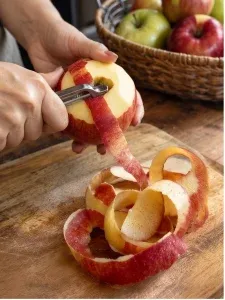
Step 1: Prep the apples
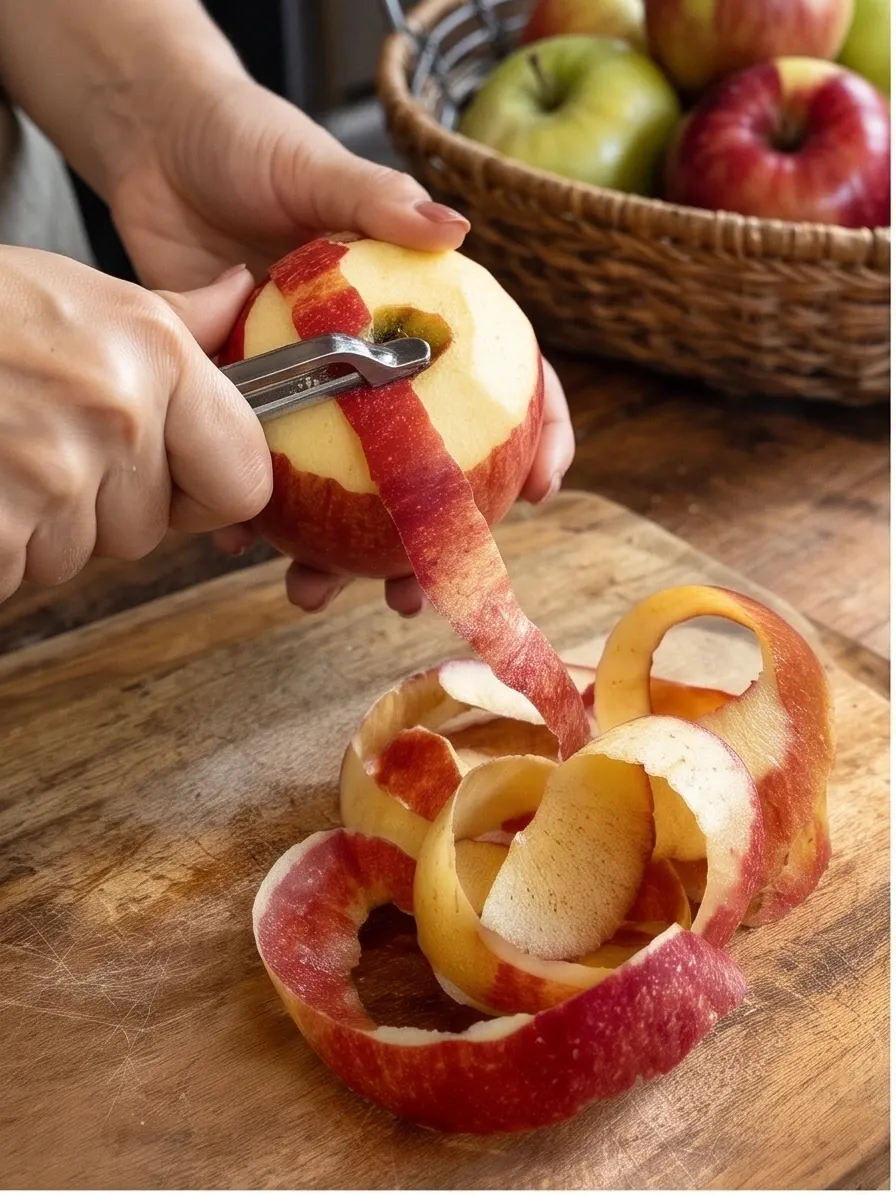
Wash the apples thoroughly before peeling. Save the clean peels and cores, removing and discarding all apple seeds. Avoid using any spoiled or moldy fruit.
Step 2: Add water
Place the apple peels and cores in a large saucepan. Add just enough water to barely cover the scraps.
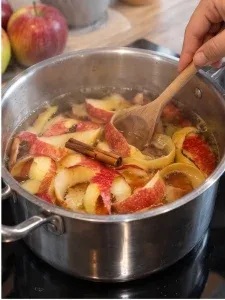
Step 3: Simmer
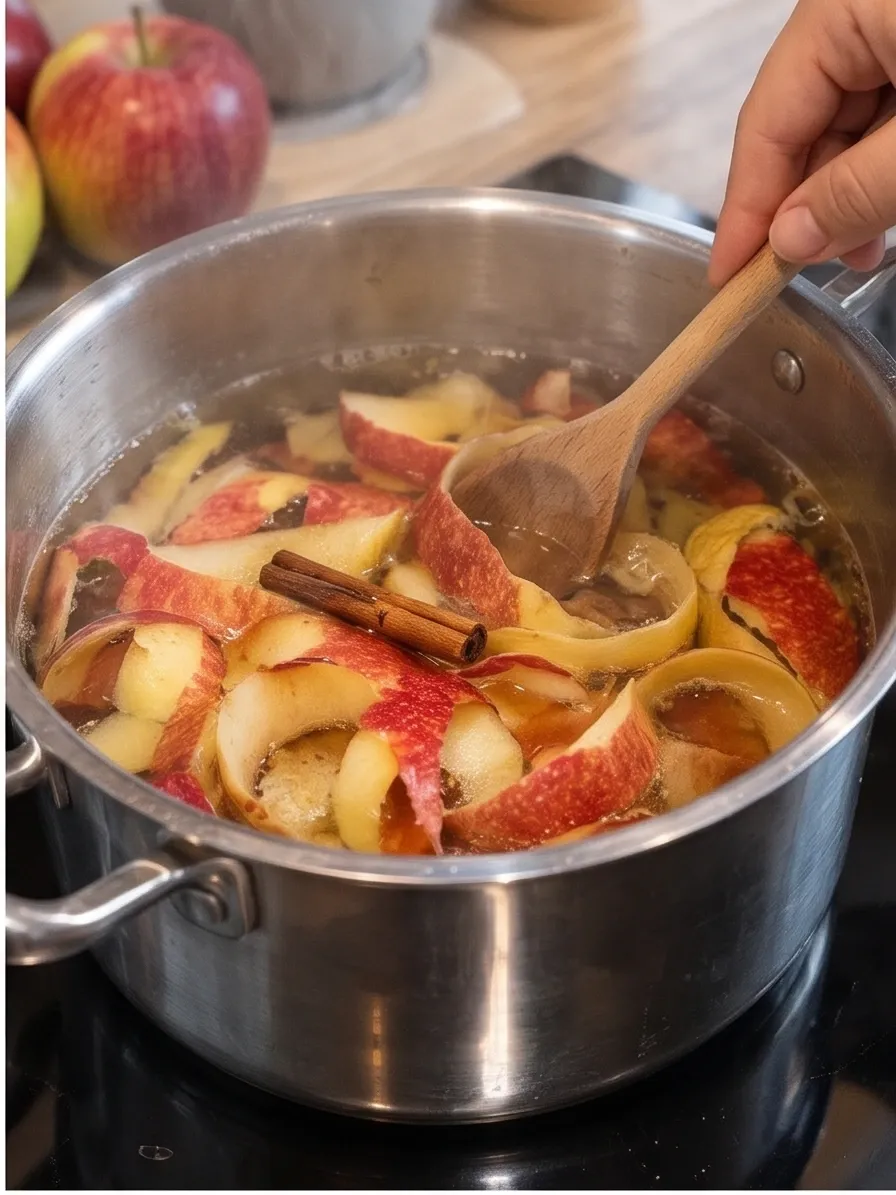
Bring to a gentle boil, then reduce the heat and simmer for 30–45 minutes, until the peels are soft and the liquid is fragrant. Add a cinnamon stick if desired.
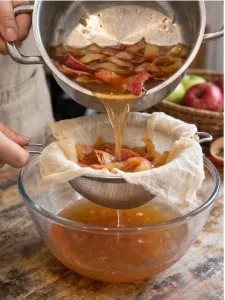
Step 4: Strain
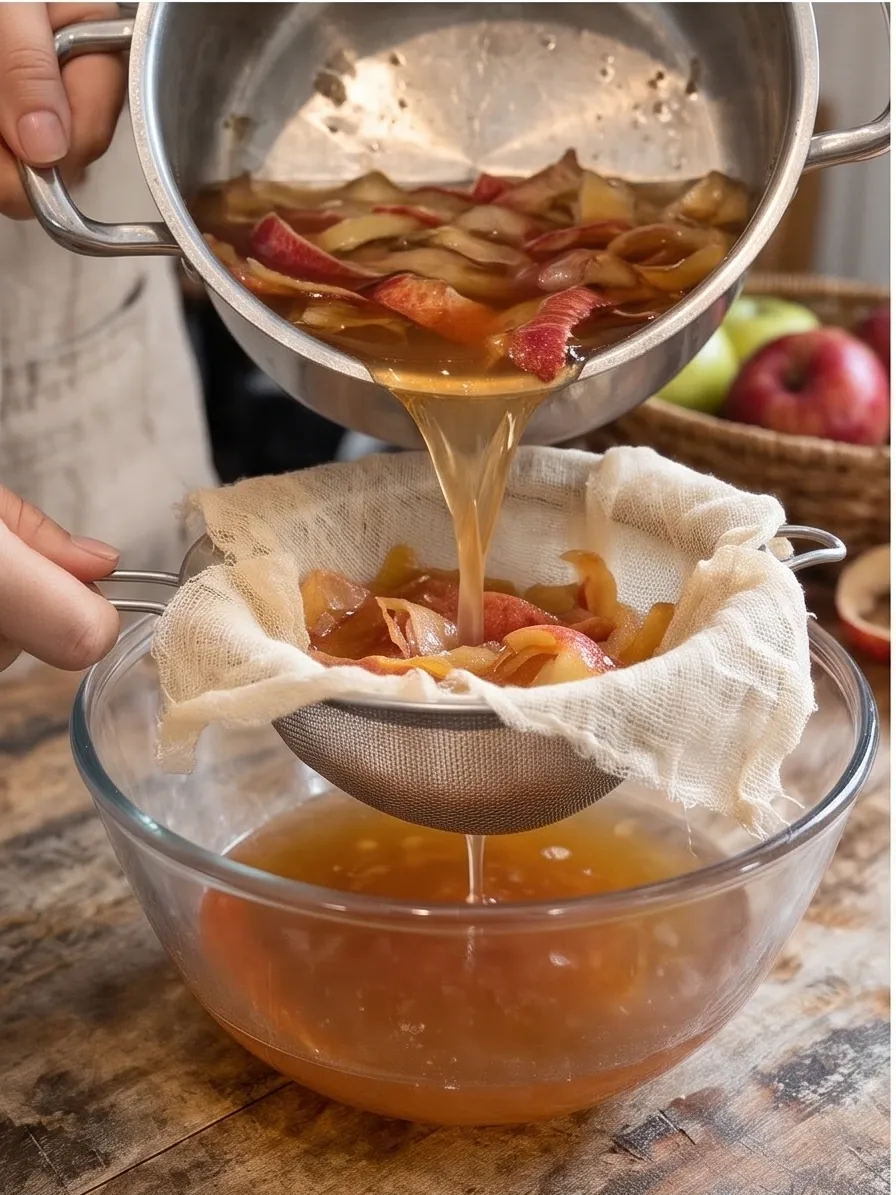
Remove the saucepan from the heat. Strain the mixture through a fine-mesh strainer lined with cheesecloth or a jelly bag into a large bowl. Let it drain naturally without squeezing for clearer jelly.
Step 5: Measure the juice
Measure the strained apple juice. For every 2 cups of juice, add 1½ cups sugar and 1 tablespoon lemon juice.
Step 6: Dissolve the sugar
Pour the measured juice into a clean saucepan. Add the sugar and lemon juice, stirring until the sugar dissolves.
Step 7: Boil
Bring the mixture to a steady boil over medium-high heat, stirring frequently to prevent sticking. Cook until it reaches approximately 220°F at sea level, adjusting for altitude.
Step 8: Test the set
Place a small spoonful on a chilled plate and let it cool briefly. Push it gently with your finger. If it wrinkles slightly, it may be ready. Natural pectin levels vary, so a firm set is not guaranteed.
Step 9: Adjust if needed
If the jelly remains runny, continue cooking briefly and test again. If needed, use commercial pectin according to its package directions.
Step 10: Jar it
Carefully pour the hot jelly into clean, heat-safe glass jars. Allow it to cool before covering.
Step 11: Chill
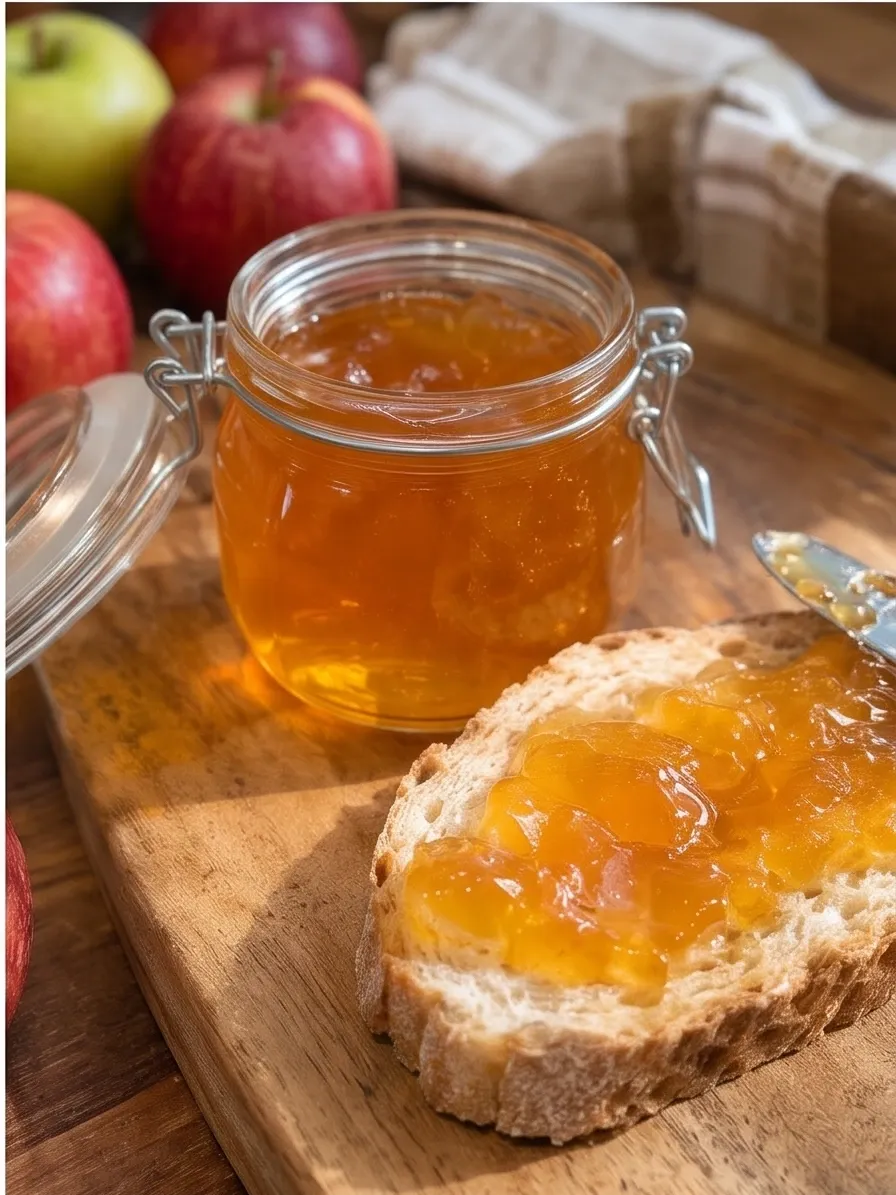
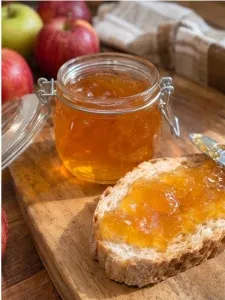
Refrigerate until completely chilled and set. Spread over warm toast, biscuits, pancakes or freshly baked bread.
Step 12: Store
Keep refrigerated and use within about 3 weeks for best quality. This is a refrigerator jelly recipe, not a shelf-stable canning recipe.
How to Serve It
Spread on warm toast, buttermilk biscuits, pancakes or fresh bread. It is also lovely stirred into yogurt, spooned over cream cheese with crackers, or given as a small homemade gift.
Leftovers & Storage
Keep the jelly refrigerated in clean glass jars and use within about 3 weeks for best quality. This is a refrigerator jelly, not a shelf-stable canning recipe, so do not store it at room temperature.
Make It Even Better: Pro Tips
- Remove every seed: seeds can make the jelly taste bitter.
- Use tart apples: they carry more natural pectin and set better.
- Don’t squeeze the bag: let it drip for clear, golden jelly.
- Keep the ratio: 1½ cups sugar and 1 tablespoon lemon juice per 2 cups juice.
- Use a chilled plate: it gives the most reliable set test.
Easy Ways to Change It Up
- Cinnamon apple: simmer with a cinnamon stick.
- Lemon zest: add a little zest for brighter flavor.
- Mixed fruit: add a few pear peels to the infusion.
- Firmer set: add commercial pectin following the package directions.
Quick Questions
Why is my jelly still runny?
Natural pectin levels vary. Cook it a little longer and test again, or use commercial pectin as directed.
Can I use any apples?
Yes, but tart apples such as Granny Smith give the best set and flavor.
Is this safe for canning?
This is a refrigerator jelly recipe, not a tested canning recipe, so keep it in the fridge.
Why shouldn’t I squeeze the cheesecloth?
Squeezing pushes cloudy pulp through and makes the jelly less clear.
Why remove the seeds?
Seeds can add bitterness, so discard them before simmering.
A Spoonful of Old-Fashioned Sweetness
This golden apple peel jelly is simple, thrifty and wonderfully comforting. Spread it on something warm and enjoy.
Enjoy!
— Ava
Homemade Golden Apple Peel Jelly
Ingredients
Method
- Wash the apples thoroughly before peeling. Save the clean peels and cores, removing and discarding all apple seeds. Avoid using any spoiled or moldy fruit.

- Place the apple peels and cores in a large saucepan. Add just enough water to barely cover the scraps.
- Bring to a gentle boil, then reduce the heat and simmer for 30–45 minutes, until the peels are soft and the liquid is fragrant. Add a cinnamon stick if desired.
- Remove the saucepan from the heat. Strain the mixture through a fine-mesh strainer lined with cheesecloth or a jelly bag into a large bowl. Let it drain naturally without squeezing for clearer jelly.
- Measure the strained apple juice. For every 2 cups of juice, add 1 1/2 cups sugar and 1 tablespoon lemon juice.
- Pour the measured juice into a clean saucepan. Add the sugar and lemon juice, stirring until the sugar dissolves.
- Bring the mixture to a steady boil over medium-high heat, stirring frequently to prevent sticking. Cook until it reaches approximately 220°F at sea level, adjusting for altitude.
- Test the jelly by placing a small spoonful on a chilled plate. Let it cool briefly, then push it gently with your finger. If it wrinkles slightly, it may be ready. Natural pectin levels vary, so a firm set is not guaranteed.
- If the jelly remains runny, continue cooking briefly and test again. If needed, use commercial pectin according to its package directions.
- Carefully pour the hot jelly into clean, heat-safe glass jars. Allow it to cool before covering.
- Refrigerate until completely chilled and set. Spread over warm toast, biscuits, pancakes, or freshly baked bread.
- Keep refrigerated and use within about 3 weeks for best quality. This is a refrigerator jelly recipe, not a shelf-stable canning recipe.