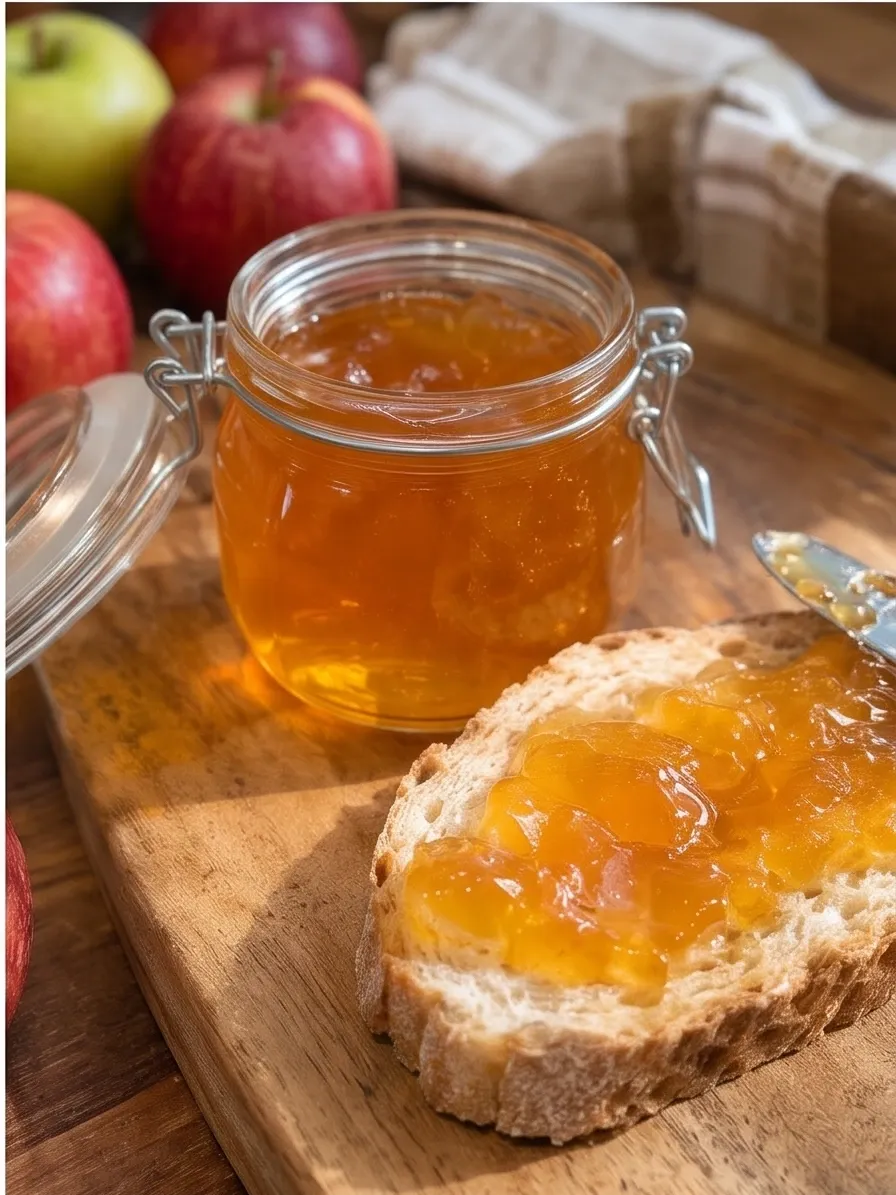
Ingredients
Method
- Wash the apples thoroughly before peeling. Save the clean peels and cores, removing and discarding all apple seeds. Avoid using any spoiled or moldy fruit.
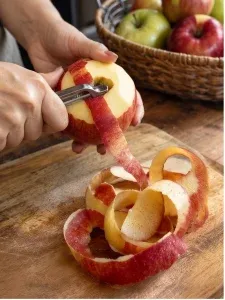
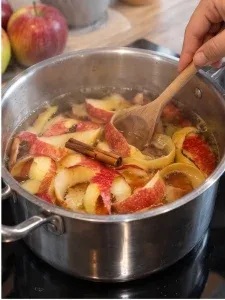
- Place the apple peels and cores in a large saucepan. Add just enough water to barely cover the scraps.
- Bring to a gentle boil, then reduce the heat and simmer for 30–45 minutes, until the peels are soft and the liquid is fragrant. Add a cinnamon stick if desired.
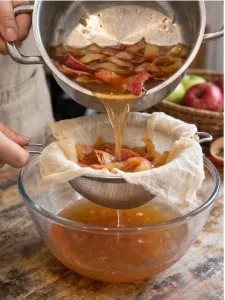
- Remove the saucepan from the heat. Strain the mixture through a fine-mesh strainer lined with cheesecloth or a jelly bag into a large bowl. Let it drain naturally without squeezing for clearer jelly.
- Measure the strained apple juice. For every 2 cups of juice, add 1 1/2 cups sugar and 1 tablespoon lemon juice.
- Pour the measured juice into a clean saucepan. Add the sugar and lemon juice, stirring until the sugar dissolves.
- Bring the mixture to a steady boil over medium-high heat, stirring frequently to prevent sticking. Cook until it reaches approximately 220°F at sea level, adjusting for altitude.
- Test the jelly by placing a small spoonful on a chilled plate. Let it cool briefly, then push it gently with your finger. If it wrinkles slightly, it may be ready. Natural pectin levels vary, so a firm set is not guaranteed.
- If the jelly remains runny, continue cooking briefly and test again. If needed, use commercial pectin according to its package directions.
- Carefully pour the hot jelly into clean, heat-safe glass jars. Allow it to cool before covering.
- Refrigerate until completely chilled and set. Spread over warm toast, biscuits, pancakes, or freshly baked bread.
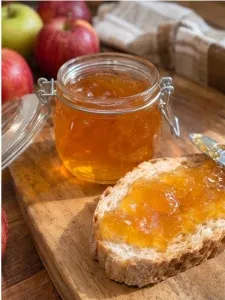
- Keep refrigerated and use within about 3 weeks for best quality. This is a refrigerator jelly recipe, not a shelf-stable canning recipe.
Notes
This is a refrigerator jelly, not a shelf-stable canning recipe. Natural pectin levels vary by apple, so a firm set is not guaranteed. Tart apples such as Granny Smith set best, and you can add commercial pectin if the jelly stays runny.