Store-bought jerky is convenient. Homemade jerky is completely on another level. This air fryer beef jerky is deeply savory, slightly sweet, perfectly chewy, and packed with a bold, complex flavor that comes from a full overnight soak in a marinade of soy sauce, Worcestershire sauce, brown sugar, and spices. No dehydrator required — just your air fryer, a pound of sirloin, and a little patience. The result is homemade jerky that genuinely tastes better than anything you can buy in a bag.
Six servings, minimal hands-on effort, and a protein-packed snack that lasts up to a week. This is the kind of recipe that makes you wonder why you ever bought the store version in the first place.
Why You’ll Make This Again
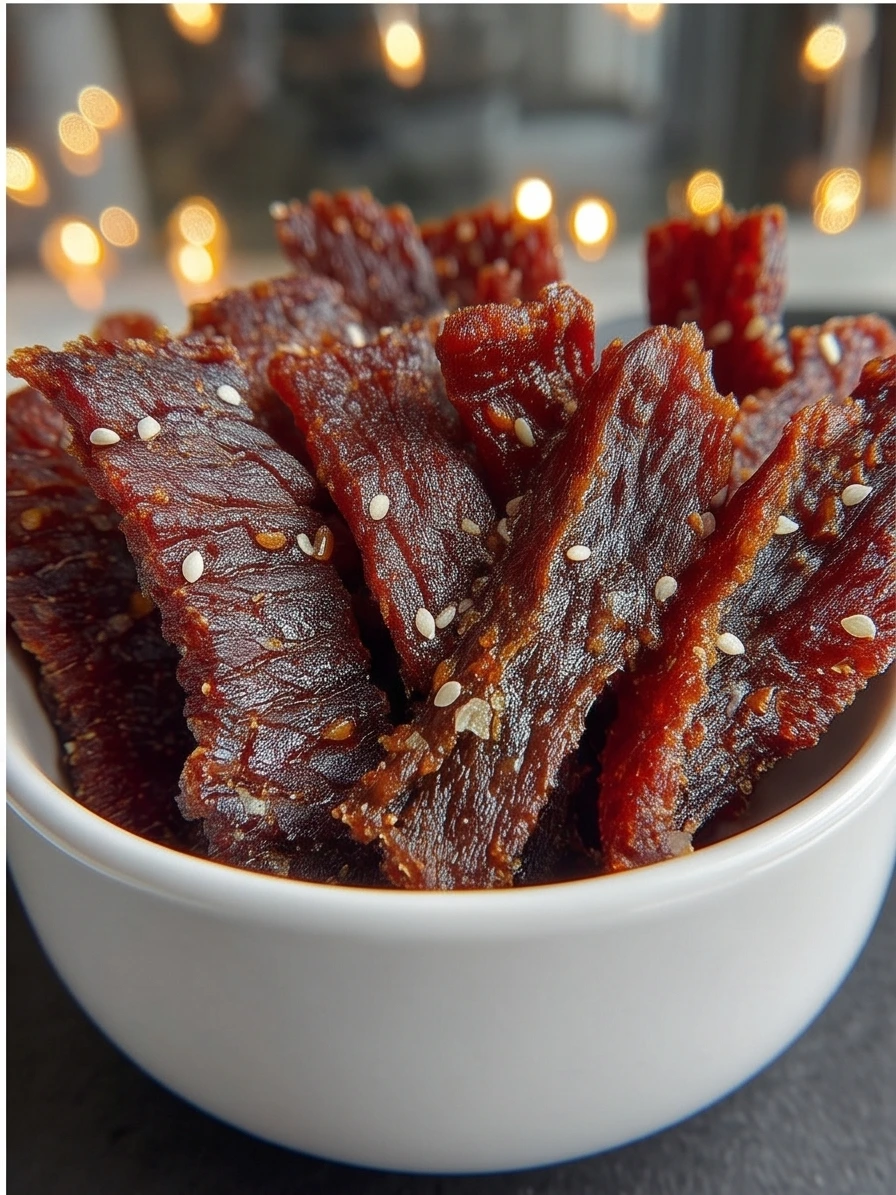
The overnight marinade is the step that makes this jerky genuinely extraordinary. The soy sauce penetrates deep into every fiber of the beef and seasons it from the inside out. The Worcestershire adds a complex, slightly tangy savory layer. The brown sugar caramelizes during the long air fry and gives each piece a subtle sweetness that balances the salt perfectly. And the low and slow air fry at 180°F for 2 to 3 hours dries each strip to that ideal jerky texture — darkened, chewy, and flexible but not brittle — in a way that genuinely rivals anything a professional dehydrator produces. Once you make this at home you will never pay store prices for jerky again.
This is a perfect year-round recipe that works especially well for road trips, hiking and camping provisions, gym bags, lunchboxes, and any occasion where you need a high-protein, genuinely satisfying snack that lasts without refrigeration. Make a batch on Sunday and have snacks ready for the entire week.
How This Comes Together
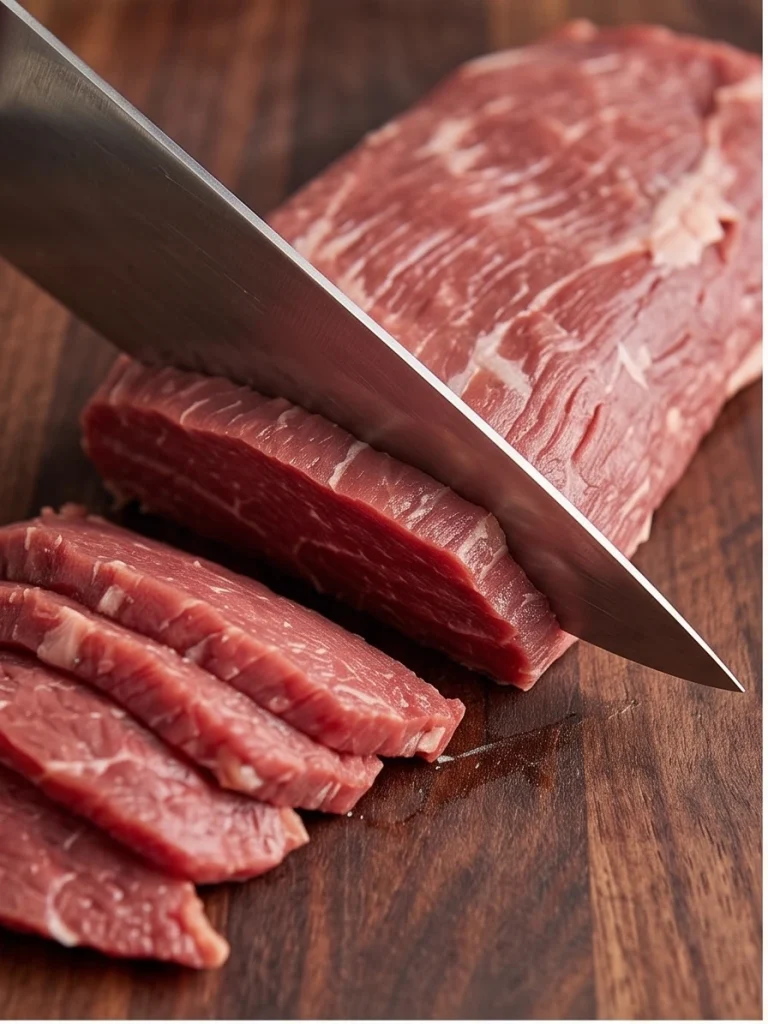
Slice the beef, marinate overnight, arrange in the air fryer, and cook low and slow for 2 to 3 hours with one flip halfway through. Most of the total time is hands-off marinating and air frying — the active work takes less than 20 minutes total. The most important technique detail is slicing the beef against the grain — cutting perpendicular to the muscle fibers shortens them and produces a jerky that is chewy and satisfying rather than tough and stringy, which is the most common disappointment in homemade jerky. Get the slicing right and everything else in this recipe is completely reliable and straightforward.
What You’ll Need
Simple pantry marinade ingredients and one pound of beef sirloin. Use low-sodium soy sauce — regular soy sauce can make the finished jerky overly salty after the long marinade and air fry.
- 1 lb beef sirloin tip steak, thinly sliced (about 1/4 inch thick)
- 1/4 cup low-sodium soy sauce
- 2 tbsp Worcestershire sauce
- 3 tbsp brown sugar
- 1/2 tsp garlic powder
- 1/2 tsp onion powder
- 1/4 tsp black pepper
- 1/4 tsp red pepper flakes
Step-by-Step Directions
Step 1: Slice the Beef
Slice the beef into thin strips about ¼ inch thick, cutting against the grain for a more tender jerky. For easier slicing, place the beef in the freezer for 30 minutes before cutting.
Step 2: Marinate the Beef
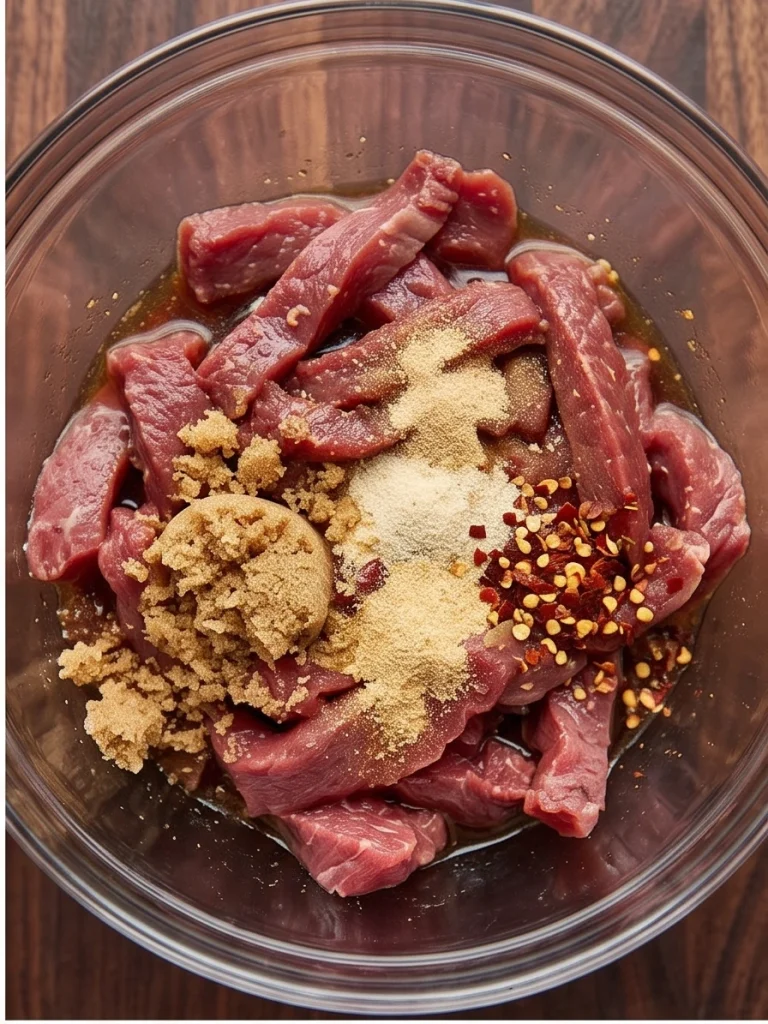
In a medium bowl, whisk together the low-sodium soy sauce, Worcestershire sauce, brown sugar, garlic powder, onion powder, black pepper, and red pepper flakes until the sugar dissolves.
Add the beef strips and toss until every piece is evenly coated. Cover the bowl and refrigerate for at least 6 hours, or preferably overnight, to let the flavors fully develop.
Step 3: Air Fry the Jerky
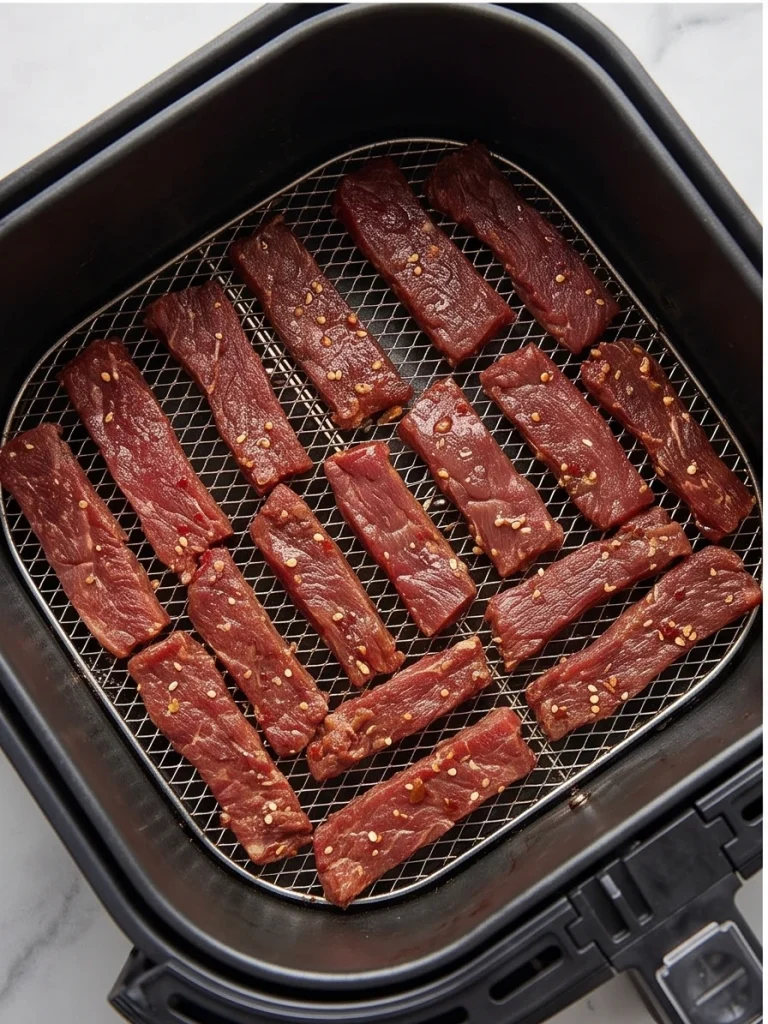
Remove the beef from the marinade and lightly pat each strip with paper towels to remove excess liquid.
Arrange the strips in a single layer in the air fryer basket, making sure they don’t overlap or touch. Air fry at 180°F (82°C) for 2–3 hours, flipping the strips halfway through cooking, until the jerky is dry, darkened, and chewy while still slightly flexible when bent.
Step 4: Cool & Store
Transfer the finished jerky to a wire rack and let it cool completely.
Store in an airtight container at room temperature for up to 1 week or refrigerate for up to 2 weeks. Enjoy as a protein-packed snack anytime.
How to Serve It
Arrange the cooled jerky strips in a wide, shallow bowl or on a wooden board and set out for snacking straight from the container. Homemade jerky needs no accompaniment — the deep, savory-sweet flavor and satisfying chew make every piece completely enjoyable entirely on its own. Pack strips into small zip-lock bags for on-the-go snacking, tuck into lunchboxes for a high-protein midday treat, or set out at a casual gathering alongside cold drinks for an effortless, crowd-pleasing snack that always generates genuine appreciation. For a complete high-protein snack pairing, serve alongside our 2-Ingredient Pizza Chips for a satisfying snack spread that covers all the cravings.
Leftovers & Storage
Store completely cooled jerky in an airtight container or zip-lock bag at room temperature for up to 1 week. Make sure the jerky is completely cool and fully dried before sealing — any residual warmth or moisture creates condensation inside the container and can cause mold. For longer storage, refrigerate in an airtight container for up to 2 weeks or freeze for up to 2 months — frozen jerky thaws quickly at room temperature and tastes just as good as fresh. The jerky will continue to dry out slightly as it sits at room temperature over the first day or two after making — this is completely normal and many people prefer the slightly drier texture on day two and three.
Make It Even Better (Pro Tips)
- Freeze the beef for 30 minutes before slicing — partially frozen beef is significantly easier to slice into thin, even 1/4 inch strips than fresh beef straight from the fridge.
- Always cut against the grain — slicing perpendicular to the muscle fibers is what makes the difference between tender, pleasantly chewy jerky and tough, stringy jerky that is difficult to eat.
- Marinate for the full overnight period whenever possible — 6 hours is the minimum but 12 to 16 hours produces a significantly more deeply flavored, more evenly seasoned piece of jerky in every strip.
- Pat the strips dry before air frying — removing excess surface marinade allows the heat to dry the beef more efficiently and produces a better jerky texture with less moisture to evaporate.
- Never overlap the strips in the air fryer basket — overlapping prevents even air circulation and produces unevenly dried jerky where some areas are properly dried and others are still moist.
- Work in batches if needed rather than crowding — a properly spaced single layer every time gives a far superior result than rushing the process by stacking or overlapping.
- Test for doneness by bending a strip — properly finished jerky bends and shows a slight white cracking on the surface without snapping or breaking completely.
Easy Ways to Change It Up
- Teriyaki version: Replace the Worcestershire sauce with teriyaki sauce and increase the brown sugar to 4 tablespoons for a sweeter, more distinctly Asian-inspired jerky that is completely addictive.
- Spicy version: Double the red pepper flakes and add a teaspoon of sriracha to the marinade for a jerky with a serious, lingering heat that builds with every piece.
- Smoked version: Add 1/2 teaspoon of liquid smoke to the marinade for a deeply smoky flavor that makes the air fryer jerky taste remarkably close to traditional wood-smoked jerky.
- Peppered jerky: Double the black pepper and add a teaspoon of coarsely cracked black pepper directly on the strips before air frying for a boldly peppery, deeply savory jerky reminiscent of classic steakhouse flavors.
- Different protein: Use thinly sliced turkey breast or chicken breast in place of beef for a lighter, leaner jerky with the same marinade — reduce the air fry time to 1.5 to 2 hours as poultry dries faster than beef.
Quick Questions
What cut of beef works best for jerky?
Sirloin tip, top round, bottom round, and flank steak are all excellent choices for homemade jerky. Look for lean cuts with minimal fat — fat does not dry out properly during the long air fry and can cause the jerky to become greasy and reduce its shelf life significantly. Sirloin tip and top round are particularly popular because they are lean, affordable, and have a consistent grain that makes slicing against it straightforward and reliable.
How do I know when the jerky is done?
The bend test is the most reliable method — pick up a piece and bend it gently. Properly finished jerky bends without snapping and shows a slight white cracking along the surface where the fibers are separating. It should feel dry and firm on the outside with no moist or soft spots. If it snaps cleanly in half it is overdone and too dry. If it bends without any cracking or resistance it needs more time. Check at the 2 hour mark and continue in 15 to 20 minute increments until the texture is exactly right.
Is homemade air fryer jerky safe to eat?
Yes — when made properly with the correct technique. The USDA recommends that beef jerky reach an internal temperature of 160°F during the drying process to ensure food safety. At 180°F for 2 to 3 hours the beef strips will exceed this internal temperature requirement. Use fresh, good quality beef, marinate in the refrigerator rather than at room temperature, and store the finished jerky properly in an airtight container for safe, delicious homemade jerky every time.
Make this homemade air fryer beef jerky this weekend and discover just how much better homemade always tastes. Tried it? Leave a comment below and tell me what flavor variation you made! — AVA
Air Fryer Beef Jerky
Ingredients
Equipment
Method
- Slice the beef into approximately 1/4-inch strips, cutting against the grain. Freeze the beef for 30 minutes first if desired for easier slicing.
- Whisk together the soy sauce, Worcestershire sauce, brown sugar, garlic powder, onion powder, black pepper, and red pepper flakes until the sugar dissolves.
- Add the beef strips to the marinade, toss until evenly coated, cover, and refrigerate for at least 6 hours, preferably overnight.
- Remove the beef from the marinade and pat each strip dry with paper towels.
- Arrange the beef strips in a single layer in the air fryer basket without overlapping.
- Air fry at 180°F for 2–3 hours, flipping the strips halfway through cooking, until dry, darkened, and slightly flexible.
- Transfer the jerky to a wire rack and cool completely before storing.
- Store in an airtight container at room temperature for up to 1 week or refrigerate for up to 2 weeks.