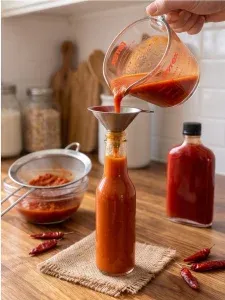
Some recipes have a way of bringing a little Southern kitchen magic into everyday meals. This Old-Fashioned Louisiana Hot Sauce is tangy, spicy and wonderfully simple, adding a lively kick to everything from eggs and soups to fried chicken and gumbo.
You can make it two ways: a fermented version for deeper, more complex flavor, or a quick non-fermented version you can finish in about 25 minutes. Love a sweet-heat contrast? Try our Pineapple Jalapeño Pepper Jelly too.
Why You’ll Make This Again
- Two methods: ferment for depth, or simmer for a fast, bright sauce.
- Only a few ingredients: chili peppers, vinegar and salt.
- Customizable heat: choose cayenne, Tabasco or red jalapeños.
- Versatile: great on eggs, soups, fried chicken, gumbo and beans.
- Makes about 20 servings: bottle it for yourself or for gifts.
How This Comes Together
For the fermented version, peppers soak in a salt brine for 7 to 14 days, then get simmered with vinegar, blended and strained. For the quick version, the peppers simmer straight in vinegar and salt until soft, then get blended and strained. Either way, you finish with a smooth, pourable sauce.
What You’ll Need
- 1 pound red chili peppers, such as cayenne, Tabasco, or red jalapeños
For the Fermented Version
- 4 cups unchlorinated water
- 3 tablespoons sea salt
- ½–1 cup white wine vinegar
For the Non-Fermented Version
- 1 cup white wine vinegar
- ½–1 teaspoon salt
- Water, as needed for thinning
Prep Time: 10 minutes | Cook Time: 10–15 minutes | Total Time: 20–25 minutes, excluding fermentation | Serves: about 20
Estimated Nutrition: about 8 calories and 0 g protein per serving.
Step-by-Step Directions
Fermented Version
Step 1: Pack the jar
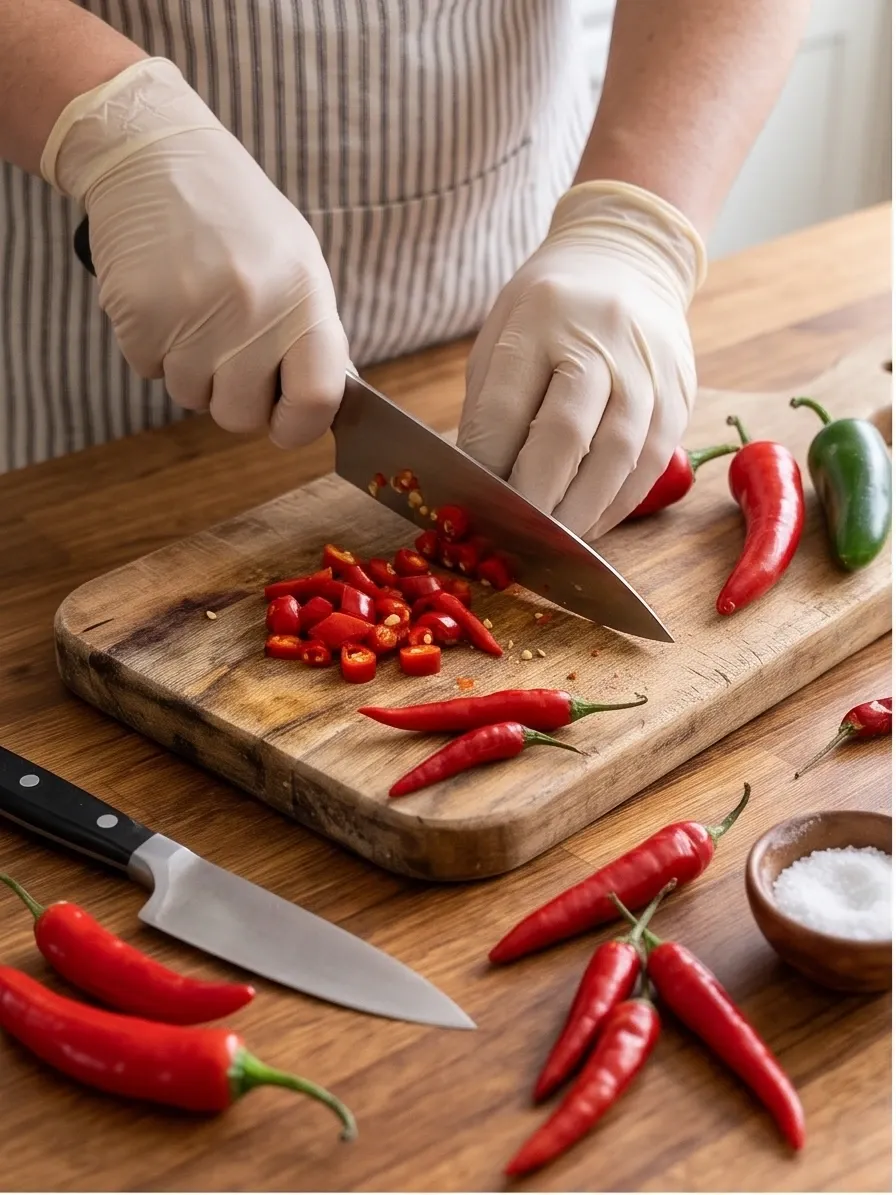
Chop the peppers and pack them into a clean glass jar, leaving at least 1 inch of space at the top.
Step 2: Make the brine
Dissolve the sea salt in the unchlorinated water to make the brine.
Step 3: Cover with brine
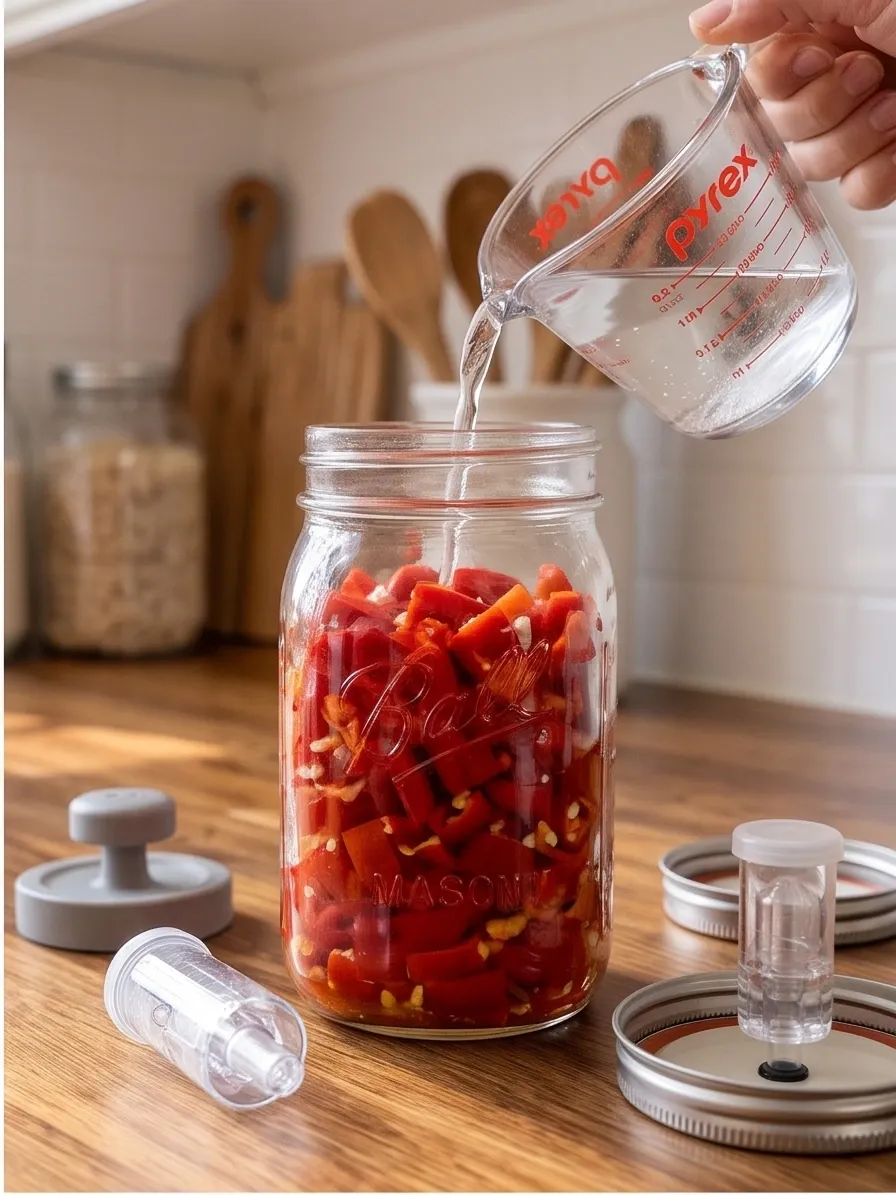
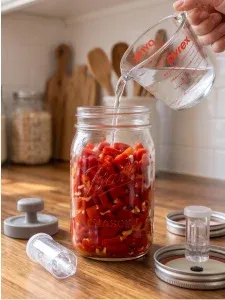
Pour enough brine over the peppers to cover them completely. Keep all peppers submerged using a fermentation weight.
Step 4: Ferment
Cover with a fermentation airlock or a suitable fermentation lid. Leave at 55–75°F, away from direct sunlight, for 7–14 days.
Step 5: Check regularly
Check regularly to make sure the peppers remain submerged. Follow your fermentation lid’s instructions for safely releasing gas if needed.
Step 6: Boil with vinegar
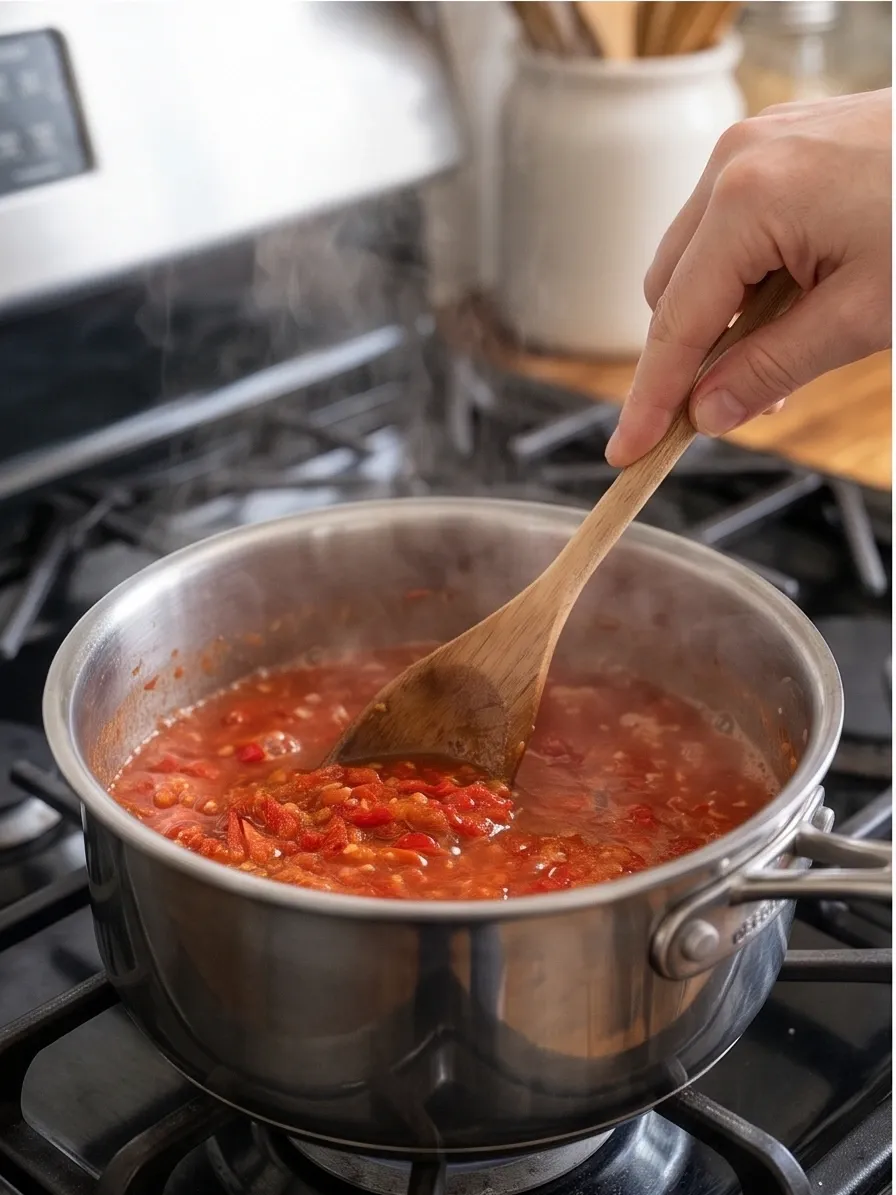
Once fermentation is complete, transfer the peppers and brine to a saucepan. Add ½–1 cup vinegar and bring to a quick boil.
Step 7: Simmer
Reduce the heat and simmer for 15 minutes. Let cool slightly.
Step 8: Blend and bottle
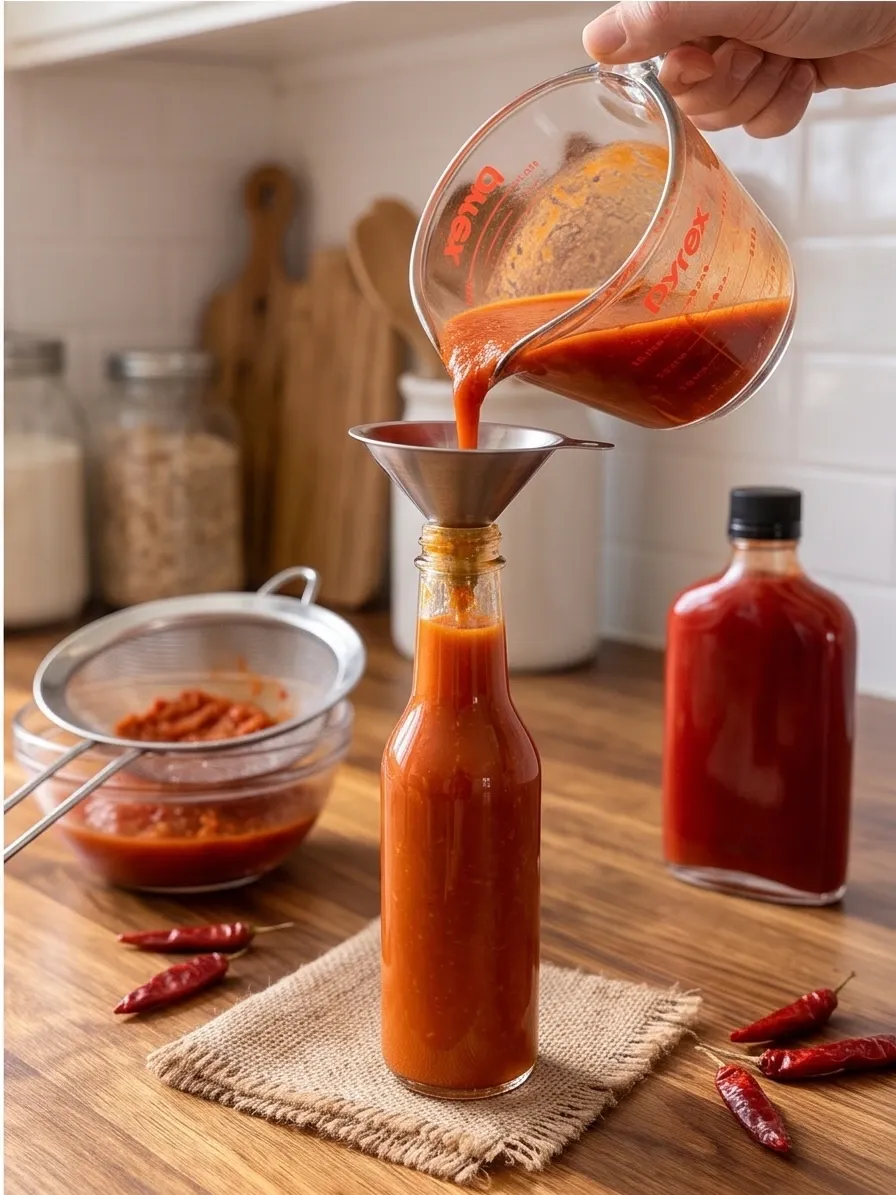
Blend until completely smooth, then strain out the solids. Pour into clean bottles and refrigerate.
Non-Fermented Version
Step 1: Combine
Place the chopped peppers, vinegar and salt in a saucepan.
Step 2: Boil
Bring to a quick boil over medium-high heat.
Step 3: Simmer
Reduce the heat and simmer for about 10 minutes, until the peppers are soft.
Step 4: Blend
Let cool slightly, then blend until smooth.
Step 5: Thin if needed
Add water 1 tablespoon at a time if the sauce is too thick.
Step 6: Strain and bottle
Strain out the solids and pour into clean bottles. Refrigerate.
How to Serve It
Shake a few drops over scrambled eggs, stir it into soups and gumbo, toss it with fried chicken, or splash it on beans, greens and rice. A little goes a long way.
Leftovers & Storage
Keep homemade hot sauce refrigerated. For shelf-stable storage, use a tested preservation recipe and process; do not rely on taste or vinegar alone. A pH of 4.0 or lower is a useful target, but measuring pH by itself does not make a sauce safe for room-temperature storage.
Make It Even Better: Pro Tips
- Use unchlorinated water: chlorine can interfere with fermentation.
- Keep peppers submerged: a fermentation weight prevents spoilage.
- Wear gloves: chili peppers can irritate skin and eyes.
- Blend until smooth: then strain for a silky, pourable sauce.
- Thin gradually: add water 1 tablespoon at a time.
Easy Ways to Change It Up
- Different peppers: try cayenne, Tabasco or red jalapeños.
- Milder sauce: remove the seeds before cooking.
- Tangier sauce: use the full cup of vinegar in the fermented version.
- Chunky style: skip straining for a thicker sauce.
Quick Questions
Which version should I make?
The fermented version has deeper flavor, while the non-fermented version is ready in about 25 minutes.
How long does fermentation take?
About 7 to 14 days at 55–75°F, away from direct sunlight.
Is it shelf-stable?
Keep it refrigerated. For room-temperature storage, use a tested preservation recipe and process.
How hot is it?
It depends on your peppers. Cayenne and Tabasco are hotter than red jalapeños.
Can I use other vinegar?
White wine vinegar gives a classic flavor, but other mild vinegars can work.
A Little Southern Kick for Every Meal
A bottle of homemade hot sauce is a small thing that makes everyday meals feel special. Make a batch and keep it close to the stove.
Happy cooking!
— Ava
Old-Fashioned Louisiana Hot Sauce
Ingredients
Method
- Chop the peppers and pack them into a clean glass jar, leaving at least 1 inch of space at the top.

- Dissolve the sea salt in the unchlorinated water to make the brine.
- Pour enough brine over the peppers to cover them completely. Keep all peppers submerged using a fermentation weight.
- Cover with a fermentation airlock or a suitable fermentation lid. Leave at 55–75°F, away from direct sunlight, for 7–14 days.
- Check regularly to make sure the peppers remain submerged. Follow your fermentation lid’s instructions for safely releasing gas if needed.
- Once fermentation is complete, transfer the peppers and brine to a saucepan. Add ½–1 cup vinegar and bring to a quick boil.
- Reduce the heat and simmer for 15 minutes. Let cool slightly.
- Blend until completely smooth, then strain out the solids. Pour into clean bottles and refrigerate.
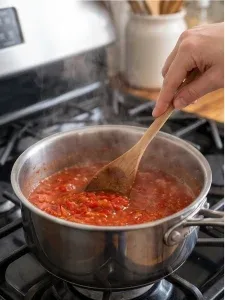
- Place the chopped peppers, vinegar, and salt in a saucepan.
- Bring to a quick boil over medium-high heat.
- Reduce the heat and simmer for about 10 minutes, until the peppers are soft.
- Let cool slightly, then blend until smooth.
- Add water 1 tablespoon at a time if the sauce is too thick.
- Strain out the solids and pour into clean bottles. Refrigerate.