This Classic Japanese Cotton Cheesecake is wonderfully light, fluffy, and delicately creamy, with a soft texture that practically melts in your mouth. Its beautiful golden top, tender center, and gentle hint of lemon make it an elegant dessert that feels special without needing elaborate decorations.
Unlike a traditional dense cheesecake, this Japanese-style favorite gets its signature cloud-like texture from carefully whipped egg whites folded into a smooth cream cheese batter. Serve it with a dusting of powdered sugar for afternoon tea, a weekend treat, or a lovely dessert to share with family and friends.
Why You’ll Make This Again
- Light and airy: Whipped egg whites give the cake its signature soft, delicate texture.
- Creamy without being heavy: Cream cheese and butter create a smooth, rich flavor balanced by the airy crumb.
- Beautiful presentation: Its golden top and snowy powdered sugar finish look lovely on any dessert table.
- Simple, familiar ingredients: Cream cheese, eggs, sugar, and a few baking staples come together in an elegant dessert.
- Perfect for sharing: This cheesecake makes a wonderful centerpiece for afternoon tea, birthdays, and family gatherings.
How This Comes Together
The secret to Japanese cotton cheesecake is creating a smooth cream cheese base and gently incorporating whipped egg whites. Cream cheese, butter, and milk are warmed together until silky, then combined with egg yolks, vanilla, lemon juice, cake flour, and cornstarch.
The egg whites are beaten with sugar until soft-to-medium peaks form. Folding them into the cream cheese mixture carefully adds air without deflating the batter. The cake then bakes slowly in a water bath, which helps it cook gently and develop its delicate texture.
What You’ll Need
- 9 oz cream cheese, softened
- 1/4 lb unsalted butter
- 1/3 cup whole milk
- 6 large eggs, separated
- 1/2 cup granulated sugar
- 1/2 cup cake flour
- 2 tablespoons cornstarch
- 1 teaspoon vanilla extract
- 1 tablespoon lemon juice
- A pinch of salt
- Powdered sugar, for dusting
Prep Time: 25 minutes | Cook Time: 75 minutes | Total Time: 1 hour 55 minutes | Servings: 8–10
Estimated Nutrition: Approximately 280 calories and 7 g protein per serving.
Step-by-Step Directions
Step 1: Prepare the Cream Cheese Mixture
Preheat your oven to 320°F. Line the bottom and sides of an 8-inch round cake pan with parchment paper.
In a saucepan over low heat, gently warm the cream cheese, butter, and milk. Stir continuously until the mixture becomes completely smooth. Remove it from the heat and let it cool slightly.
Add the egg yolks, vanilla extract, and lemon juice, whisking gently until combined. Sift in the cake flour and cornstarch, then stir until the batter is smooth and free of dry pockets. Avoid overmixing.
Step 2: Whip the Egg Whites and Fold the Batter
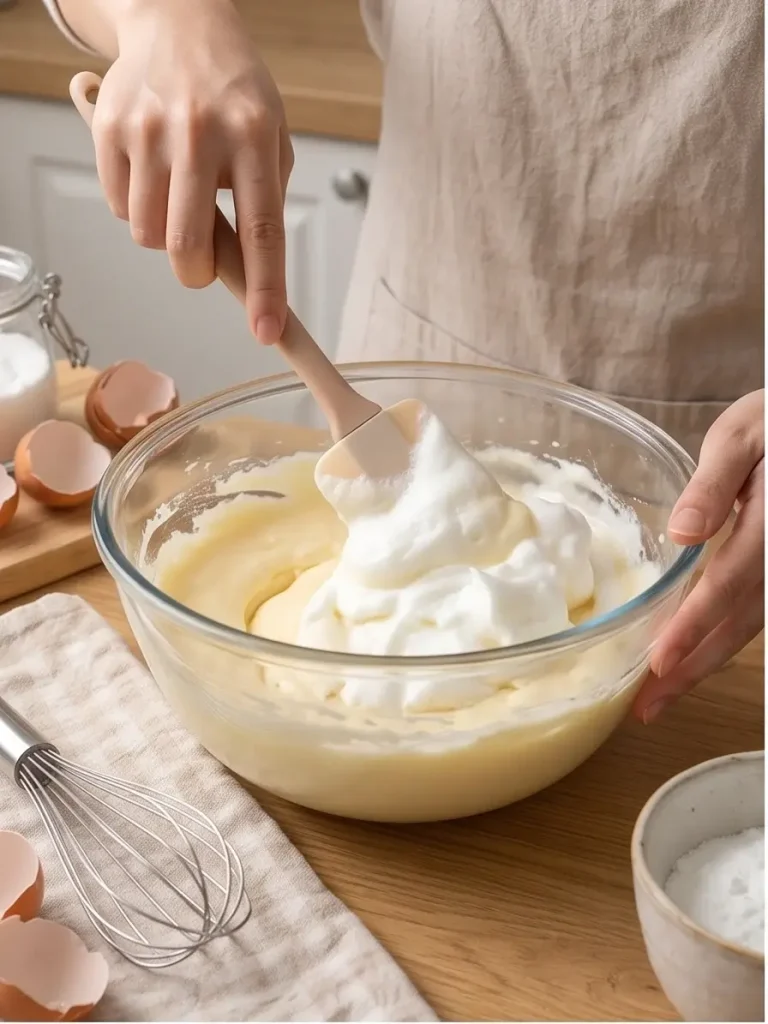
In a clean, dry bowl, beat the egg whites with a pinch of salt until foamy. Gradually add the granulated sugar while continuing to beat until soft-to-medium peaks form. The mixture should look glossy and hold its shape without becoming stiff or dry.
Fold one-third of the whipped egg whites into the cream cheese mixture to lighten it. Add the remaining egg whites in two additions, using a spatula to gently lift and fold the batter until no large white streaks remain.
Work slowly and avoid vigorous stirring. Preserving the air in the egg whites is essential for achieving the cheesecake’s signature fluffy texture.
Step 3: Bake the Cheesecake in a Water Bath
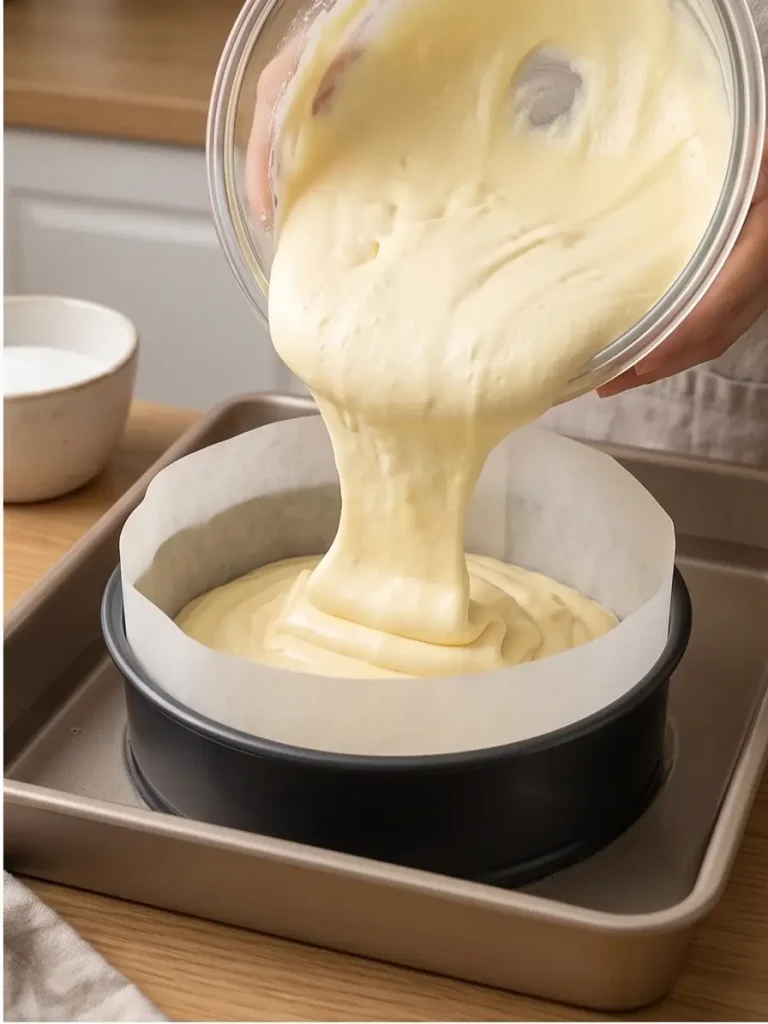
Pour the batter into the prepared cake pan and smooth the surface. Place the cake pan inside a larger baking tray, then carefully pour hot water into the outer tray to create a water bath.
Bake at 320°F for 20 minutes. Reduce the oven temperature to 285°F and continue baking for another 45–55 minutes, until the cake is set and lightly golden.
Turn off the oven and leave the cheesecake inside for 15 minutes with the door slightly open. This gradual cooling helps reduce the risk of sudden shrinking. Carefully remove the cake from the oven afterward.
Step 4: Cool, Dust, and Slice
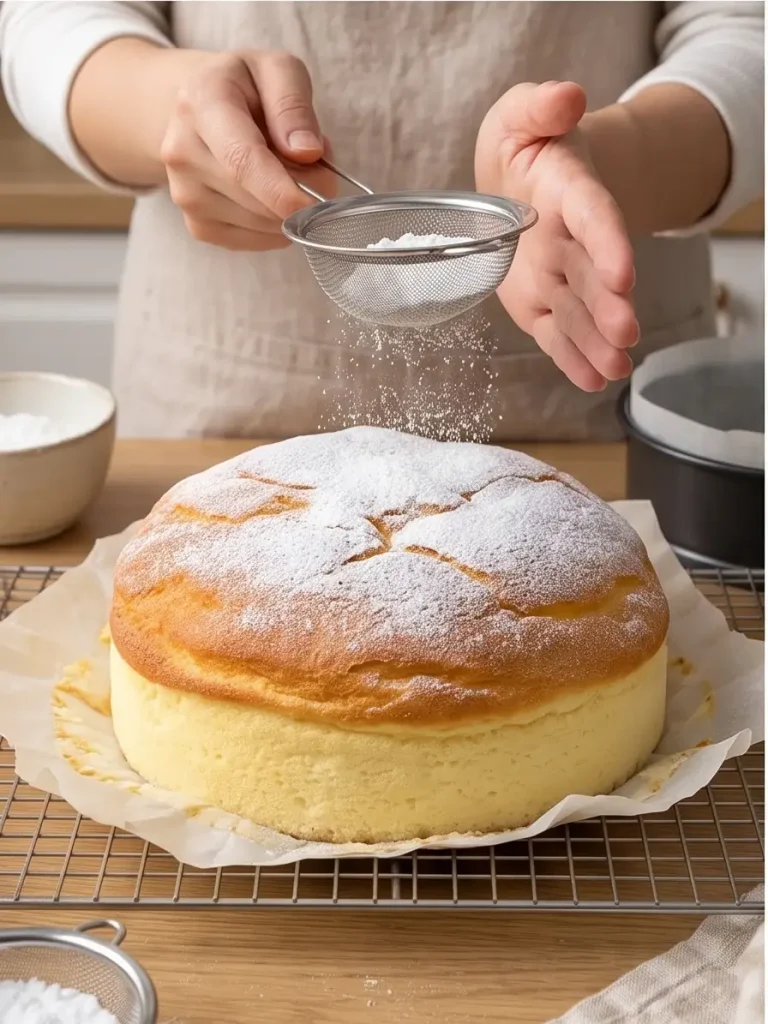
Allow the cheesecake to cool completely before carefully removing it from the pan. The cake is delicate while warm, so handle it gently to preserve its soft sides and airy structure.
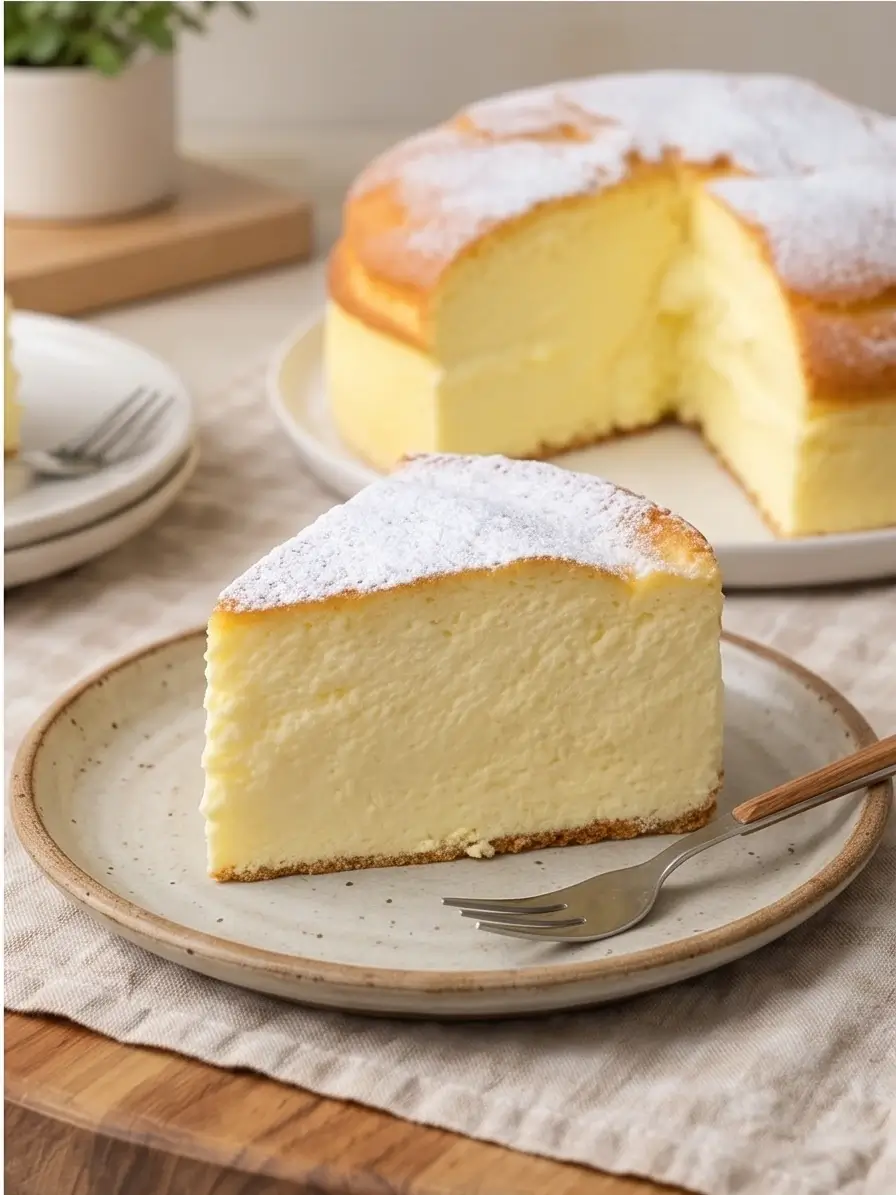
Dust the top with powdered sugar just before serving. Use a sharp knife to cut gentle slices, wiping the blade between cuts for a cleaner presentation. Each slice should reveal a tender, creamy interior beneath the lightly golden top.
How to Serve It
This cheesecake is lovely served simply with a light dusting of powdered sugar and a cup of tea or coffee. Its delicate flavor also pairs beautifully with fresh strawberries, raspberries, blueberries, or a few slices of seasonal fruit.
For a special dessert table, serve it alongside fresh berries and lightly sweetened whipped cream. If you prefer a little extra citrus flavor, add a few thin lemon slices or a small spoonful of berry sauce to each plate.
Leftovers & Storage
Refrigerator: Once completely cool, store the cheesecake in an airtight container or cover it well and refrigerate for up to 3 days. Chilling helps the cake firm up and makes it easier to slice neatly.
Serving chilled: The cheesecake can be enjoyed straight from the refrigerator or allowed to stand briefly at room temperature for a softer texture. Keep it refrigerated when not serving.
Freezing: You can freeze individual slices wrapped tightly and placed in a freezer-safe container. Thaw them in the refrigerator before serving. The texture may be slightly different after freezing, so freshly baked cheesecake offers the best cloud-like consistency.
Make It Even Better: Pro Tips
- Use softened cream cheese: This helps the base become smooth and prevents lumps.
- Separate the eggs carefully: Even a small amount of yolk in the whites can make them harder to whip properly.
- Keep your bowl clean and dry: Grease or moisture can interfere with whipping the egg whites.
- Avoid stiff egg whites: Soft-to-medium peaks are easier to fold into the batter without losing too much air.
- Fold gently: Use slow, sweeping motions rather than stirring vigorously.
- Don’t skip the water bath: It creates a gentler baking environment and helps the cheesecake cook evenly.
- Cool gradually: Leaving the cake in the switched-off oven with the door slightly open helps reduce sudden temperature changes.
- Wait before slicing: Let the cheesecake cool completely so it has time to settle and hold its shape.
Easy Ways to Change It Up
Lemon Cotton Cheesecake: Add a little extra lemon zest to the batter for a brighter citrus aroma while keeping the texture light.
Vanilla-Forward Cheesecake: Add a small amount of extra vanilla extract for a warmer, sweeter aroma.
Berry-Topped Cheesecake: Serve each slice with fresh strawberries, raspberries, or blueberries for a fruity finish.
Chocolate Drizzle: Add a light drizzle of melted chocolate after the cheesecake has cooled for a simple decorative touch.
Extra Citrus Finish: Dust the cake with powdered sugar and serve with a little lemon zest or a spoonful of berry sauce.
Quick Questions
Why did my Japanese cotton cheesecake shrink?
Some shrinkage is normal as the cake cools. Sudden temperature changes, overbeaten egg whites, or an underbaked center can contribute to more noticeable shrinking. Cooling the cake gradually in the switched-off oven can help.
Why isn’t my cheesecake fluffy?
The texture depends heavily on properly whipped egg whites and gentle folding. If the whites are underwhipped, the cake may lack lift; if they’re too stiff or folded in too aggressively, the batter can lose the air needed for a light texture.
Do I really need a water bath?
A water bath is strongly recommended for this recipe. It helps the cheesecake bake gently and evenly, supporting its delicate texture and reducing the risk of an overly dry exterior.
How do I know when the cheesecake is done?
The top should be lightly golden, and the cake should look set rather than liquid in the center. Follow the suggested baking time, but remember that ovens and pans vary, so check the cake carefully toward the end of baking.
Can I make Japanese cotton cheesecake ahead of time?
Yes. Bake it a day ahead, allow it to cool completely, and refrigerate it covered. Add the powdered sugar just before serving for the prettiest finish.
A Little Slice of Cloud-Like Comfort
There is something truly special about a cake that’s both delicate and comforting. This Classic Japanese Cotton Cheesecake brings together a creamy flavor, a soft cloud-like crumb, and a beautiful golden finish in a dessert that’s worth taking your time over.
Serve it for afternoon tea, share it with loved ones after dinner, or save a slice for a quiet moment with your favorite cup of coffee. Sometimes, the simplest desserts are the ones we remember most.
“A beautiful cake doesn’t need layers of frosting or elaborate decorations. Sometimes, a soft slice, a little sweetness, and a moment shared around the table are more than enough.”
— Ava
Classic Japanese Cotton Cheesecake
Ingredients
Equipment
Method
- Preheat the oven to 320°F. Line the bottom and sides of an 8-inch round cake pan with parchment paper.In a saucepan over low heat, gently warm the cream cheese, butter, and milk. Stir continuously until completely smooth. Remove from the heat and let cool slightly.Add the egg yolks, vanilla extract, and lemon juice, whisking gently until combined. Sift in the cake flour and cornstarch, then stir until smooth and free of dry pockets. Avoid overmixing.
- In a clean, dry bowl, beat the egg whites with a pinch of salt until foamy. Gradually add the granulated sugar while beating until soft-to-medium peaks form. The mixture should look glossy and hold its shape without becoming stiff or dry.Fold one-third of the whipped egg whites into the cream cheese mixture to lighten it. Add the remaining egg whites in two additions, gently lifting and folding with a spatula until no large white streaks remain. Avoid vigorous stirring to preserve the air.
- Pour the batter into the prepared cake pan and smooth the surface. Place the cake pan inside a larger baking tray, then carefully pour hot water into the outer tray to create a water bath.Bake at 320°F for 20 minutes. Reduce the oven temperature to 285°F and continue baking for another 45–55 minutes, until the cake is set and lightly golden.Turn off the oven and leave the cheesecake inside for 15 minutes with the door slightly open. Carefully remove the cake from the oven afterward.
- Allow the cheesecake to cool completely before carefully removing it from the pan. Handle it gently while warm to preserve its soft sides and airy structure.Dust the top with powdered sugar just before serving. Slice gently with a sharp knife, wiping the blade between cuts for a cleaner presentation.